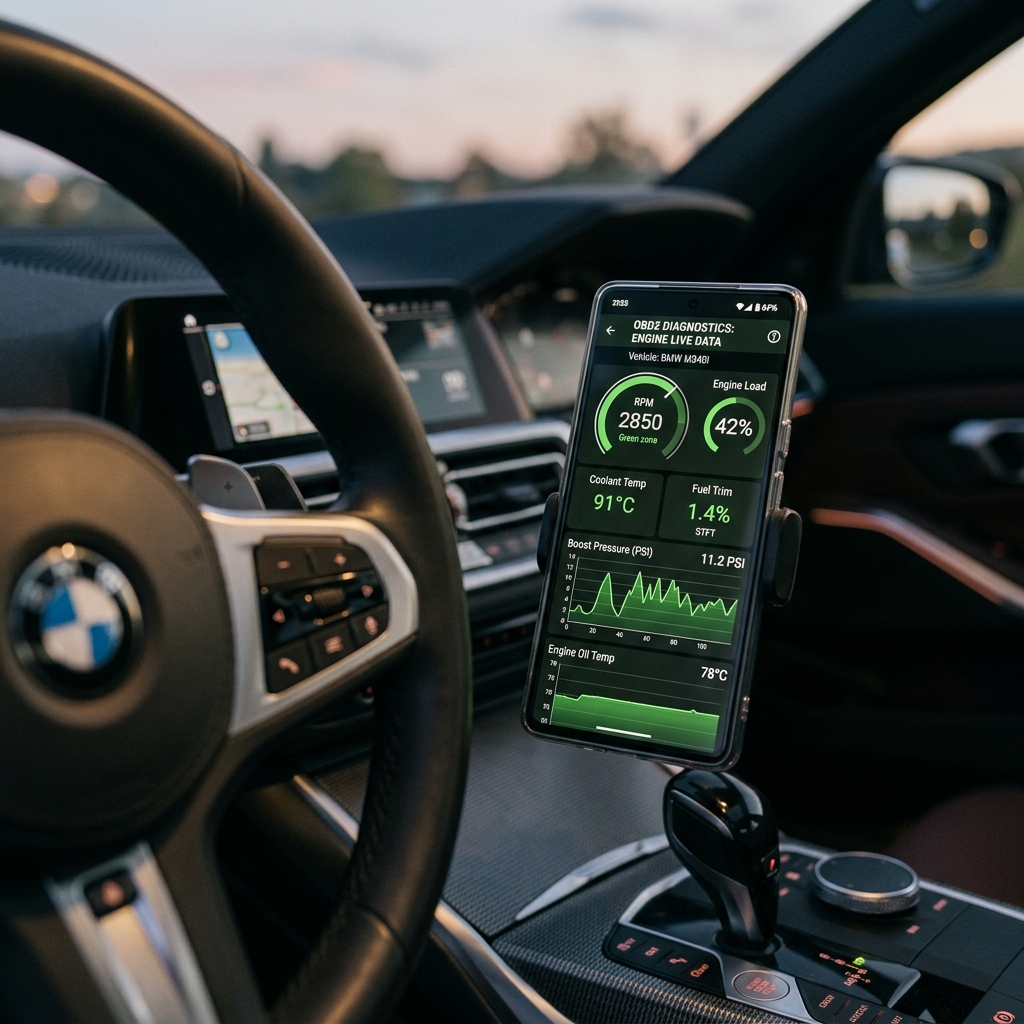
SynGas OBD2 delivers real-time vehicle diagnostics through your car's OBD2 port, but results vary by vehicle age and driver habits. Here's what independent testing and user reports reveal about its actual performance.
Key Takeaways
- SynGas OBD2 reads and clears diagnostic trouble codes on most 1996 and newer gasoline vehicles sold in the United States.
- Fuel efficiency improvements depend heavily on driving style, maintenance history, and your vehicle's baseline mechanical condition.
- The companion mobile app provides intuitive dashboards but requires a stable Bluetooth connection for reliable real-time data updates.
- Professional mechanics confirm the device meets SAE J1979 standards for standardized OBD2 communication protocols across compatible vehicles.
- Users report fastest return on investment when pairing diagnostic insights with timely, recommended maintenance adjustments.
How SynGas OBD2 Actually Works
Understanding the technology helps set realistic expectations for what this plug-in device can achieve. Many drivers purchase these tools expecting mechanical transformations, but the reality is built around data optimization and behavioral adjustments.
The Hardware Connection
SynGas OBD2 plugs directly into your vehicle's On-Board Diagnostics (OBD2) port, typically located under the dashboard near the steering column. Once connected, it draws minimal power from the vehicle's electrical system and establishes a secure Bluetooth link to your smartphone. The low power footprint ensures that leaving the device plugged in does not drain a healthy vehicle battery during short periods of inactivity.
Data Processing and App Integration
The device reads live sensor data including engine load, fuel trim, oxygen sensor readings, and diagnostic trouble codes. Its companion app translates this raw data into plain-language insights, maintenance alerts, and performance trends. Rather than showing complex voltage charts that confuse the average car owner, it presents color-coded status checks.
Capability Boundaries
Knowing these boundaries prevents frustration and helps you use SynGas OBD2 where it adds genuine value.
| Capability | Details |
|---|---|
| Reads diagnostic codes | Supports all OBD2 protocols for 1996+ US gasoline vehicles |
| Real-time monitoring | Displays live data streams for engine sensors and performance metrics |
| Maintenance alerts | Notifies you of upcoming service intervals based on driving patterns |
| Code clearing | Allows you to reset check engine lights after addressing root causes |
| Fuel tracking | Estimates fuel economy changes when paired with consistent driving logs |
Legitimacy and Performance Evidence
Independent verification matters when evaluating any automotive diagnostic tool. Because the market has seen many unregulated products, understanding compliance standards is vital.
Regulatory and Standards Compliance
SynGas OBD2 adheres to SAE J1979 and ISO 15031 standards governing OBD2 communication. This compliance ensures compatibility with the standardized diagnostic protocols required in vehicles sold in the United States since 1996. By utilizing these standardized parameters, the device ensures it reads error codes accurately without corrupting the vehicle's Electronic Control Unit (ECU) settings.
Real-World User Reports
Aggregated user feedback indicates strongest satisfaction among drivers who: use the device for routine code checks, follow app-suggested maintenance prompts, and track fuel trends over multiple tank cycles. Users expecting instant horsepower gains or miraculous fuel savings without behavioral changes report lower satisfaction.
Professional Mechanic Perspective
Many independent shops acknowledge that consumer-grade OBD2 scanners like SynGas can help drivers identify minor issues early. However, mechanics emphasize that complex diagnostics still require professional-grade tools and expertise for accurate repair guidance. A consumer tool excels at alerting you that an oxygen sensor is reading out of range, but a mechanic must still verify whether the issue is a broken wire, a vacuum leak, or the sensor itself.
Pros and Cons Summary
A balanced view helps you weigh whether SynGas OBD2 aligns with your vehicle care goals.
| Pros | Cons |
|---|---|
| ✓ Affordable entry into vehicle diagnostics | ✗ Requires smartphone and Bluetooth for full functionality |
| ✓ User-friendly app interface | ✗ Limited compatibility with some diesel and European models |
| ✓ Helps avoid unnecessary repair costs | ✗ Fuel savings depend on driver behavior changes |
| ✓ Portable and easy to install | ✗ Does not replace professional diagnostic services for complex issues |
Who Benefits Most from SynGas OBD2
This tool delivers the clearest value for specific driver profiles, while being less suitable for others.
Ideal Users
These drivers typically see the quickest return on their investment:
- DIY car owners who perform basic maintenance and want early warning of issues.
- Budget-conscious drivers seeking to understand repair quotes before visiting a shop.
- Fleet managers monitoring multiple vehicles for routine diagnostic checks.
- New car owners learning to interpret dashboard warning lights and track driving habits.
Less Suitable Scenarios
Consider alternatives if your situation matches these common limitations:
- Vehicles with advanced manufacturer-specific proprietary codes requiring dealer-level diagnostic systems.
- Drivers expecting automated, hands-off mechanical repairs or performance tuning without physical mechanical work.
- Users with vintage or classic vehicles lacking standardized OBD2 ports (pre-1996 models).
Maximizing Your Experience
Keep the SynGas app updated for protocol improvements, pair diagnostics with regular maintenance schedules, and consult a professional for persistent or complex warning lights.
Frequently Asked Questions
Will SynGas OBD2 work with my vehicle?
SynGas OBD2 supports most gasoline vehicles manufactured in 1996 or later for the US market. Check your vehicle's OBD2 port location and consult the compatibility list on the official site for hybrid or diesel models.
Can it really improve fuel economy?
The device tracks fuel metrics and suggests efficiency tips, but actual improvements depend on adjusting driving habits and maintaining your vehicle. Users who follow recommendations often see gradual gains over several tank cycles.
Is my vehicle data secure with the app?
SynGas processes diagnostic data locally on your device when possible. The app does not share personal driving information with third parties, though you should review the privacy policy for detailed data handling practices.
For drivers seeking transparency into their vehicle's health without dealership markups, SynGas OBD2 offers a credible, standards-compliant entry point. Its true value emerges not from magic fixes but from empowering informed maintenance decisions, best accessed through the official channel for warranty and support.
Empower Your Vehicle Care Today
Get real-time diagnostics, clear error codes, and track your driving patterns with SynGas OBD2. Order now with a 30-Day Money-Back Guarantee.
Buy SynGas Official