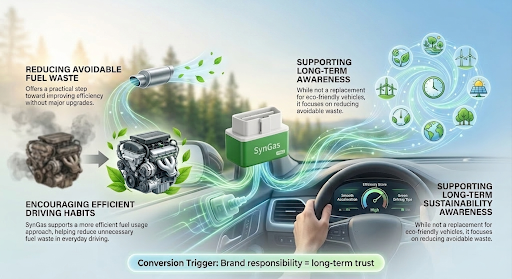
Proven driving habits combined with smart OBD2 technology deliver measurable fuel savings. This guide separates effective strategies from marketing hype, highlighting what truly lowers your cost per mile.
Key Takeaways
- Smooth acceleration and steady highway speeds reduce fuel waste more than any single gadget.
- Proper tire pressure and routine maintenance form the foundation of efficient driving.
- OBD2 devices like Syngas can support gradual efficiency gains by optimizing engine data patterns.
- Realistic expectations matter: results vary by vehicle condition, driving style, and calibration time.
- Combining behavioral changes with compatible technology yields the most consistent savings.
Proven Fuel-Saving Habits That Deliver Real Results
Before considering any device, master these foundational practices. They require zero investment and produce immediate benefits.
Note: These habits work independently or alongside efficiency tools.
- Maintain steady speeds using cruise control on highways
- Avoid rapid acceleration and hard braking in city driving
- Remove unnecessary weight and roof racks when not in use
- Keep tires inflated to manufacturer-recommended pressure
- Use the recommended grade of motor oil for your engine
These adjustments reduce engine strain and improve combustion efficiency. They also extend vehicle longevity, making them valuable regardless of other upgrades.
How OBD2 Technology Supports Efficiency Goals
Modern vehicles rely on electronic control units to manage fuel delivery, ignition timing, and emissions. The OBD2 port, standard in cars manufactured after 1996, provides access to this diagnostic data.
Devices designed for this interface can read real-time performance metrics without altering factory settings. When used responsibly, they offer a non-invasive way to support smarter fuel usage patterns.
What Syngas Does (and Does Not) Do
Syngas is a plug-and-play OBD2 module that connects to your vehicle's diagnostic port. It reads engine data and adapts to driving behavior over a calibration period of approximately 150 miles.
- Pros: Simple installation, no mechanical modifications, works within manufacturer parameters, transferable between compatible vehicles.
- Cons: Requires consistent driving for calibration, results vary by vehicle condition, does not replace routine maintenance or repairs.
Important: Syngas does not reprogram your ECU, override safety systems, or guarantee fixed percentage savings. It operates alongside your vehicle's existing framework to support gradual optimization.
Realistic Expectations: What to Expect After Installation
After plugging in the device, drive normally for 100 to 150 miles to allow the system to learn your patterns. Some users notice subtle improvements earlier, while others see changes accumulate over several weeks.
Factors influencing results include vehicle age, maintenance history, typical driving routes, and fuel quality. The device works best when paired with the efficient habits described earlier.
Comparing Fuel-Saving Approaches
Different solutions target fuel economy through distinct mechanisms. Understanding these differences helps set appropriate expectations.
The following comparison highlights key distinctions among common approaches.
| Feature | Syngas OBD Device | Fuel Additives | Professional Tuning | Magnetic Devices |
|---|---|---|---|---|
| Installation | Plug-and-play | Manual pour-in | Specialist required | Simple attach |
| Cost Type | One-time purchase | Recurring expense | High upfront | Low initial |
| Mechanism | Data pattern optimization | Chemical cleaning | ECU reprogramming | Claimed field effect |
| Risk Level | Low, non-invasive | Potential residue | High if improperly done | Uncertain efficacy |
| Reversibility | Fully removable | Temporary effect | Often permanent | Easily removed |
Verdict: For drivers seeking a low-risk, reversible option that complements good habits, an OBD2-based approach offers a balanced starting point.
Who Benefits Most From This Approach
This solution suits drivers who log regular miles, maintain their vehicles responsibly, and want to explore incremental efficiency gains without mechanical modifications.
Ideal candidates include daily commuters, rideshare professionals, and families managing multiple vehicles. Those with older or poorly maintained cars should address mechanical issues first for best results.
Conclusion
Fuel efficiency improves through consistent habits supported by compatible technology, not quick fixes. When realistic expectations meet responsible usage, tools like Syngas can contribute to meaningful savings over time. For those ready to explore this approach, the official channel provides verified products and support.
Frequently Asked Questions
Will Syngas work with my vehicle?
It fits most cars and light trucks with an OBD2 port, typically models from 1996 onward. Check your vehicle's manual or consult the official site for specific compatibility details before purchasing.
How long until I notice a difference?
Most users report gradual changes after the device completes its 100 to 150 mile calibration phase. Consistent driving patterns help the system adapt more effectively for measurable results.
Does this replace regular vehicle maintenance?
No. The device supports efficiency but does not substitute for oil changes, tire care, or engine repairs. Combining it with routine maintenance delivers the most reliable long-term benefits.
Ready to Reduce Your Fuel Costs?
Get the authentic SynGas formula directly from the official manufacturer. Order now for exclusive discounts.
Buy Now at the Official Website